Tuesday, June 4, 2024

10 Years into the Southern Portrait Project


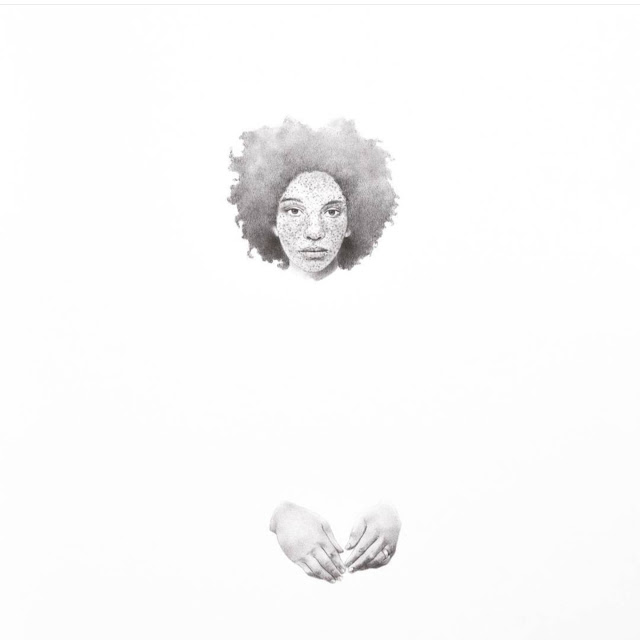
Many wonderful things have happened in the last year.  I have been continuing to work on paintings and drawings associated with the Southern Portrait Project as well as other new work. 

The painting above, "Playing Ghostbusters in the Woods" was part of a group exhibition at the Pensacola Museum of Art.

I am working on a series of paintings inspired by antique textiles and patterns from multiple cultures and eras, such as the 40 x 40" oil painting below.


I have started on some handpainted wallpaper projects that are very exciting.  More to come about those in the near future.  They are inspired by the Findings drawings and paintings from the SPP.  Below "Pink Nest" in 60" motif half-brick repeat. 


Tuesday, April 18, 2023

Nine Year Anniversary


Hydrangea from Oven Park, Tallahassee, FL.  A non-invasive non-native that performs beautifully in the South.


It has been nine years since I ended my self-propelled residency in Monroe, LA.  I spent every two weeks in Monroe, LA and driving through Louisiana and back and forth to Texas. During that time, I saw parts of Louisiana I had never seen as a child growing up in Baton Rouge.  It was exciting and very illuminating.  I met some amazing people and saw the results of the different cultures - Native American, African American, French, Spanish and English in people and the marks that they made on the land.

Spanish and French created land allotments differently.  That is still apparent in the way that neighborhoods, shopping centers and private lots are shaped and named.  The influence from the different cultures is very strong.  Things that I had not anticipated, the effects from the Great Flood of 1927 are still talked about as are the centuries old struggle between Catholics and Protestants that started in Europe.  Many people in Louisiana still talk about the seperation between Catholics and Protestants and how that had effected their families and communities.  

During the last seven years I have not only explored Louisiana but parts of Mississippi, Alabama, Florida, Georgia and the Carolinas.  

I am still creating artwork about the South and drawing and painting portraits.  I have started a teaching blog, partially for young family members but also because I found Art Education in southern rural and even urban areas to be so limited.  

Some art centers and museums work very hard to engage a lot of people in their communities - young, old, different incomes and different races.  Other institutions focus mainly on one group of people and are not inclusive.  I am hoping to share information about art all over the world from different eras and different cultures and to create lessons for young students from PreK to adults who want to continue to learn and try new projects.  

My work is changing and becoming more about color, patterns, nature - all things that were fascinating to me growing up near the very rural city limits of Baton Rouge in the 1960's and 1970's.  

I am studying native plants from the Big Bend area in Florida.  Most of them are also found across the South and some into Texas and Mexico.  I am experimenting with a lot of plants in my own garden,  planting, photographing and drawing or painting them.  Gardens and agriculture are some of the things prevalent across the South that bring people together.  Working farms and garden clubs are common everywhere.  You can see the remains of 100 year old or older gardens around abandoned houses.  Groves of trees on farms and leading up to little wood frame houses in the country planted over 100 years ago continue to thrive.  The food, shade and enjoyment that these plants gave to people hundreds of years ago is still enjoyed and appreciated today.  

Invasive non-natives have threatened a lot of native plants.  I am trying to do my part to preserve the native plants by planting as many natives in my yard as possible.  


Tuesday, August 16, 2022

Art Education Blog


This summer I taught Youth Art classes at a wonderful venue in Tallahassee, FL, Lafayette Arts and Crafts Center.  The Center is run by the city of Tallahassee and includes both an art studio and ceramic studio.  Youth through Adult classes are available there.  

Starting to teach art again inspired me to create an art project blog.  Six people in my family Ryan, Josh, Henry, George, Francie and Esti have also been an inspiration for the blog which is dedicated to them.   I will continue adding art projects to my teaching blog at sparkleberrystudio.blogspot.com.  Check back there often and send images of the artwork that you make from the projects.  


Beginning a Second Series of Southern Portraits


This summer I started a second series of Southern Portraits in oil on paper.  I have started photographing people for the series in Texas, Louisiana, Florida and Georgia.  

Most of the paintings will be 18 x 14" like the graphite drawings on claybord.  A few will be much larger.

I am looking forward to seeing the first 10 portraits together.

Above is a detail from "Toni, Leon County, FL" work in progress.


Sunday, February 13, 2022

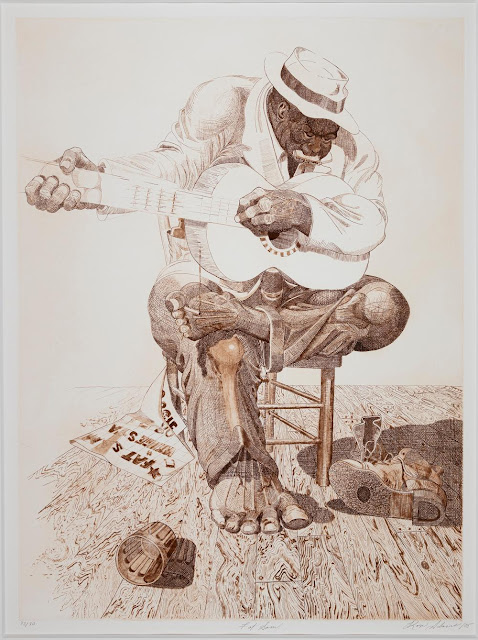
Ron Adams, Master Printer and Artist


I am quite happy to have finished this pencil and acrylic study of our friend Ron Adams and started on a larger oil on canvas painting of him.  We met Ron in Houston through a former colleague of his from Hand Graphics, Kathy Gurwell. We exhibited his work at our gallery in Houston, TX, Gallery Jatad.

Ron was quite a character and loved to tell stories about his life.  He was born in Detroit, MI.  He talked about being a technical draftsman in California.  His style as an artist is certainly influenced by his drawing of mechanics.  The structural anatomy can be seen in the bodies of his figures.  

Ron loved to tell stories about spending time in Mexico and working on the 1968 graphic design team for the Mexican Olympics.  He also purchased and transported lithography stones from Mexico to California enabling a couple of fine art presses there to offer a variety of sizes of lithography prints.  Gemini G.E.L. was one of those presses.  He trained as a printmaker at Gemini where he quickly progressed from assistant printer to Master Printer.  At Gemini he worked with Jasper Johns, Robert Rauschenberg, Frank Stella, Ellsworth Kelly and many other artists.  

In 1973 he moved to San Francisco to work as Master Printer for Editions Press.  

Shortly after that he opened Hand Graphics in Sante Fe, New Mexico.  Some of the notable artists that he worked with were Judy Chicago, Luis Jimenez, John Biggers and Charles White.  After running Hand Graphics for thirteen years he sold the business to focus on his own work, later moving to Atlanta, GA and then Houston, TX.  

He moved from Houston to California to live with his daughter and her family until his death in 2020.  

As gallerists we were able to exhibit his work although were never able to create the large exhibition that we wanted to.  Some of his original paintings and prints were stolen from a house and studio that he lived in.  He subsequently moved to a different neighborhood and lived in his studio where the reference photo for this portrait was taken on his sofa.  While there he became good friends and colleagues with Darin Forehand at Forehand Press. 

I regret that Ron was no longer printing at that time.  He talked about wanting to produce a suite of prints of my work and how he would do it but he was not physically able to create prints at the time. Working with him would have been an incredible experience.

We have donated three of his prints to two museums in Louisiana, the Masur Museum of Art and the New Orleans Museum of Art. His imagery is very familiar to Southerners.  A Blues musician, a man rafting down a river, a woman in pin curls and a printmaker illuminated by light from a window.  His subject matter is universal and about the human existence. 

Fat Sam is one of my favorite images by Adams.  We donated an impression of this image to the Masur Museum of Art in Monroe, LA as well as a version of Mr. Blue.  We donated Blackburn, a portrait of his friend Robert Blackburn, to the New Orleans Museum of Art.  Ron Adams and Robert Blackburn were two of very few African-American Master Printmakers during their lifetime.  Master Printers such as Darin Forehand continue their legacy. 

You can find more details about Ron's life at the Historymakers and view some of his prints at Hand Graphics


Fat Sam2005

Engraving on Arches paper
23-3/4 x 17-1/2 inches (image)
30 x 22-1/2 inches (sheet)

Study for Mural of Alice May Webb


Study for a mural of Alice May Webb, a founding resident of St Andrews, FL, which is now a neighborhood in Panama city.  Alice and her husband owned a grocery, stocked a pond with fish for customers and ran a snow cone hut  in the summers. Alice was an avid gardener and quilter.

One of Alice's granddaughters, Elaine, gave me the reference photo for this painting.  The photograph shows her in the garden in front of her house wearing a large brooch.  She represents a quintessential American grandmother in her element in the first part of the 20th Century. 

The study was part of a grouping of portraits, quilt designs and textile samples that I created for
These People Are My People at Gadsden Art Center on the fall of 2019.

Alice May Boynton was born on January 17, 1886.  Her father was Stephen Creech Boynton.
She married Leslie Everett Webb and they had a daughter Audrey in 1911. Audrey was born in St. Andrews, FL.  Alice died in St. Andrews at age 61 in 1947.

What amazing years to have lived through, especially in Florida which was not heavily populated and frontier like during that time.  After the Civil War, Florida was restored to the Union on June 25, 1868.  St. Andrews was not incorporated until 1908.  For a long time it was a small beach town with few full-time residents.  Alice and her family were part of the small community of full-time residents.  Panama City annexed St. Andrews and three other small towns in 1927.

Native peoples inhabited the Panama City area from at least 13,000 years ago.  The Spanish arrived in 1500.  St. Andrews being a port and Confederate stronghold was attacked repeatedly by Federal troops and destroyed in 1863.  

The town was described by the St. Andrews Bay Railroad and Mining Company which was selling real estate there as:

“The loveliest location in all Florida. In a land where the genial climate of a winterless round of years will reward your every effort with the most bountiful harvests; where the summers are joyous seasons of refreshing breezes and invigorating nights of cool and healthful slumber; and where the winters are but bewitching contrasts to the summers in heightening and intensifying the delicious pleasure of a life in the fairest land the sun ever blessed with it’s genial kiss. There is but one Florida, and St. Andrews Bay is it’s brightest jewel.”

St. Andrews neighborhood was designated as a redevelopment area in 1989 by the Panama City.

Read more about the history of St. Andrews here.

Alice May Webb, Latex on wood, 24 x 24", 2019
 

Monday, February 7, 2022

Photographic Findings

Photographic Finding #1 (Nicholas Biddle)


The drawings above and below are two of the directions for new work.  The first Photographic Findings #1 (Nicholas Biddle) was the result of images found during research of related subjects.  I found these images captivating and wanted to used them in a drawing.  The goal is to create a grouping with images that are related visually or thematically or both and create a conversation with the people or objects in the grouping.

The figure on the left is Nicholas Biddle who was the first person injured in the Civil War.  The woman and girls are from different eras - mid 19th C, Victorian era and the 1960's.  One of the things that struck me about the reference photographs was the beautiful patterns and forms of the clothing and the expressions on the faces.  While some of the faces had less focus and detail than others, personality and expression still reads very clearly.

Photographic Findings #1 (Nicholas Biddle) will be included in the juried Members Exhibition at the Pensacola Museum of Art opening March 11, 2022.  Juried by Carrie Ann Bade.  

The Dance (Homage to a Pugilist, Louis R. Goodwin)

This grouping of boxers from the 1930's and 1940's is in honor of my grandfather who was a semi-professional boxer in West Texas and Mexico in the 1930's before he joined the Air Force during WWII.  He later coached boxing at Cisco High School in Cisco, TX.  

I do have a good photograph of him boxing so choose peer professional fighters, one of whom is Max Baer, who was World Heavyweight Champion from 1934-35 and the son of Jewish immigrants from Alsace-Lorraine and Bohemia.  Max Baer will be a main figure in Photographic Findings #2.

I used to sit on my grandfather's lap and watch boxing matches on TV.  I remember him talking about how important movement and strategy was.  How boxing was similar to choreography.  The placement of the figures was inspired by Matisse's The Dancers.


Wednesday, January 13, 2021

Recent Work at Ann Connelly Fine Art


Drawings Inspired by Textiles


Some newish textile inspired works.  These color drawings are of Victorian era textiles.  "Daisy Gloves" above were drawn from a photograph found on the internet of some antique gloves for sale.  The jacket below was drawn from a photograph that I took in Monticello, FL at the Jefferson County Historical Society in the Wirick - Simmons House built in 1831.                

Both are large scale drawings.  The gloves above 40 x 40" on Duralar.  Other versions of "Daisy Gloves" are also in vibrant colors.  The drawing of the woman's jacket below is 40 x 70", on Duralar.  

I chose these subjects because of the beautiful craftsmanship with which they were constructed.  The construction creates beautiful lines and shadows.  I have always thought of sewing and textiles as being very similar to architecture and building.  They are living sculptures that must be resilient, fit both function and aesthetics and must be made by a very skilled artist who understands both the materials and the way the garment will move and be stressed.  In addition there are aesthetics and culture to consider when creating a garment.  To be a seamstress is to be both an artist and a builder.

These drawings are available to view in person at Ann Connelly Fine Art in Baton Rouge, LA. 


Textiles and Text


"Buffalo Song" at Avis Frank Gallery, Houston, TX


I have been considered for a book about Textiles and Text.  The book is an overview of 1000 contemporary female artists using textiles and text in their work.  

The book will be published in 2021 by Timglaset Editions of Sweden, edited by Amanda Earl.  

As part of the process of putting the book together each artist was given a set of interview questions.  Below are the questions and my answers.  

1. Can you tell us a bit about yourself, where you’re based, a bit about your art?

I currently live and work in Tallahassee, FL. I was born in and have mostly lived in the Southern United States of America.  I grew up in Baton Rouge, LA where I was surrounded by people from a wide variety of cultural backgrounds - Spanish, French, Italian, African, Native American, Asian and British.  Those people  were fiercely proud of their heritage as well as being proud of being Louisianians.  

My own artistic sensibilities are rooted in this upbringing.  I have always admired art that blends different time periods and peoples and comes from collective experiences.  My work is mostly about identity, sense of place and stories whether they be individual's stories or community stories.  The landscapes of the South are prominent in my work even though I do not paint a many landscapes, I consider them to be as important as the people I meet and I listen to their stories.  

2. Can you describe your work with combining textiles and text? Please name a work
and discuss it, process and the motivation behind its creation.

While I learned to sew, embroider and quilt from my grandmother, mother and aunt and I understand why other artists would refer to their use of textiles as "women's work", I have never assigned a gender orientation to the use of textiles in my own work.  I think of sewing, crocheting, knitting, stitching and textile design to be about construction, materials and technique and gender neutral.  I have a background in architectural design.  Using the fabric to dye, cut patterns, stitch and create either 3-D or 2-D pieces of artwork is very architectural to  me.  

Some of the objects that I have created such as "Buffalo Song", "Surveillence Maritime" or a series of shifts that are about women disappearing on the border of Texas and Mexico I consider to be sculptures made of fabric.  They are about surface, form and color.  They are about space, both enveloping it and being surrounded by it.

"Buffalo Song" is a hanging sculpture with two main elements.  One is a very long panel of gold silk fabric that is attached to the ceiling and flows through  the second element, a woolen military style jacket onto a hoop skirt armature.  The silk is not stitched, it is guided through the jacket and around the armature to look like a beam of light becoming a skirt.  A metal armature holds the jacket erect as if it were being worn.  At the bottom edge of the skirt there are words from a Lakota-Sioux Buffalo Song written in pencil, circling around the partial sphere that creates the skirt.  The piece is about the intersection of European and Native cultures, iconic forms and words representing the language and sound of the songs.  

In some ways the piece is about my great-grandmother Marie Dean Smalley Overbeck who along with her sister made her way to Oklahoma as a young woman.  They traveled from Kansas into what was then called Indian Territory to homestead. For my great-grandmother this was freedom to create a new life for herself.  She met her husband there.  He claimed the plot of land next to hers.  She was unwittingly part of the demise of a culture of people and unfortunately probably part of the over farming in Oklahoma and what would create the "Dust Bowl".

"Buffalo Song" represents the sunlight and nomadic life of the Native-American tribes of that area who hunted and respected the American Bison.  The song was sung before a hunt to call the buffalo and prepare the hunters.  The military style jacket represents the Europeans moving west, claiming land and usurping territories from the First Peoples.  The European and United States military jackets were prized by Native Americans and incorporated into their own style of dress.  The hoop armature echoes the hoop skirt of the era. The penciled and very subtle words of the Buffalo Song written along the bottom of the defacto skirt is a requiem to that lost way of life. The song whose text I used is still being sung and danced and will not be forgotten.  

My great-grandmother's wish for freedom and a new life lead her to a place where other cultures were being destroyed.  I feel that it is my duty to create something that honors those First Peoples and their cultures as they honored the land and the buffalo.


3. How does it fit in with the rest of your artistic practice?

"Buffalo Song", "Surveillance Maritime", the shifts about missing women in Northern Mexico, "A Gesture of Love" and other constructions using fabric, dye, stitching and text are all inspired by people.  They are about hardworking people looking for their place in the world and the hope of fulfilling their best potential.   

The people who inspire me are women and men, every day people.  They struggle and they succeed, they celebrate and they mourn, they live.  My work is about life and the stories of individuals and communities.  

I choose the materials and techniques that best express what I am thinking and feeling.  Sometimes that comes to me in an image.  Sometimes the materials themselves inspire the idea.  I like to to create sculptural things with texture, rich colors and a lot of  handmade detail.  Textiles are often my choice for expressing memories of people because the clothes, their forms and styles, embody power. 


4. Can you please name one or two women visual artists who work with language/text
who have influenced or inspired you and why they have done so?
 
I have to be honest and say that I cannot think of any women artists who have specifically influenced or inspired my work with text. 

The women whose text has inspired me the most have been writers: Irene Nemirovsky, Zora Neale Hurston, Willa Cather and Pearl Buck.  These authors/artists are women who write about life and whose words evoke powerful images.


5. Anything you would like to add?

While I have been included in this book because I am a female artist who uses text and textiles in my work, what I want most is to be seen as an artist.  An artist who tells stories, who creates subtle and powerful images and who perhaps heals through those stories and images.  


Wednesday, October 17, 2018

Tallahassee International


I am honored to have been chosen for the Tallahassee International Juried Competition this year.  Unfortunately, I did not get this post up in time and the exhibition is over.  The exhibition was a wonderful array of national and international work showing a huge variety of styles and ideas.  Free catalogues are still available at the museum.

The exhibition happens at Florida State University Museum of Fine Arts, otherwise known as FSU MoFA.  This gem of a museum housed in a mid-century brutalist building with beautiful gardens both around and tucked inside of the museum is a must see if you visit or live in Tallahassee, Florida.  

Exciting things are happening at FSU MoFA and next year's Tallahassee International should be amazing as well.  If you are in the area check out their exhibitions. Both  Fallon Theatre and the Museum of Fine Arts share the building at 530/540 Call St. 

Above: Nest, Watercolor, colored pencil, acrylic and oil on paper. 20 x 20" 

Monday, October 1, 2018

Richard Clague and Louisiana Landscapes

I first saw Richard Clague's paintings at the LSU Museum of Art in Baton Rouge.  Each state has painters who specialize in landscapes of the state or region.  Suffice it to say Clague was very skilled as a painter and had a keen eye for detail and balance in the lush landscapes of Louisiana.

http://www.knowlouisiana.org/entry/richard-clague-jr


Richard Clague whose handsome self-portrait is above was a Louisiana painter born in Paris. 


Pastoral paintings of rural Louisiana and coastal lines were his specialty.


Clague's contemporaries like Marshall Smith and William Buck also painted Southern landscapes plein air or out in the open with their easels and oil paints. 

Above:

 Self-Portrait dedicated to his grandmother, Madame Pierre de la Roche of New Orleans, with an inscription which reads, “A ma chère Grand-Mère” (To My Dear Grandmother)

Farm in St. Tammany Parish 1951-1870


A short list of museums whose collections include Richard Clague: 

The New Orleans Museum of Art, the Historic New Orleans Collection, Louisiana State Museum and the Ogden Museum of Art.

Tuesday, July 31, 2018

Southern Portrait Project Coming Soon


Since moving to Tallahassee, Florida almost two years ago I have not written on this blog.  I did not expect to have such a long hiatus from adding entries here. I have been busy creating new work, exploring the area and establishing new goals for my artwork.  

I started exhibiting my work at Ann Connelly Fine Art early this year.  ACFA is a beautiful gallery with wonderful, educated and professional people working there.  I am honored to be included in their line up of artists.

I have continued to photograph people for portraits, record stories, research history and learn about the landscapes and native plants.  Some of those images and stories will appear on the blog soon.  I have met some amazing people from the descendant of a ship captain and plantation owner in Charleston, SC to a man whose grandfather walked to Cedar Key, FL from Indianapolis, IN in 1869 to a landscape gardener who has a passion for puzzles and art. Everyone has an amazing story.

In order to continue my work on the Louisiana Portrait Project and keep it relevant to my travels and my move to Florida, I decided to expand the project to the Southern states.  I will not necessarily try to create a portrait for each county of each state but to create an overview of the states with people, landscapes and stories from different regions of each state. I am sure that I will be working on this subject matter for many years to come.  

The first exhibition that I will have relating to this new expanded project is at The Gadsden Art Center and Museum in the fall of 2019.  I will be exhibiting portraits of people from this region including Gadsden and Leon counties but also portraits from Georgia, Alabama, Louisiana and the Carolinas. 

Some of my new paintings are above and below.  

Above: Nest on Lilac Background,  Oil and colored pencil on paper mounted on board.

Below: Vermillion Nest #6, Oil on Duralar


Thursday, November 10, 2016

Review of "Sound and Silence" by Rosemary Poole-Carter


Louisiana Portrait Project: Sound and Silence by Lisa Qualls

Rauch Gallery at Gaston College, Dallas, North Carolina

September 2016
By Rosemary Poole-Carter 
On September 29th, the final day of the Rauch Gallery exhibition of Louisiana Portrait Project: Sound and Silence, I attended the artist’s talk and viewed the exhibit along with a full gallery of art lovers and budding artists. Already a fan of Lisa Qualls’s work and sharing her affinity for the state of Louisiana, I expected to enjoy her exquisitely detailed drawings of human forms and her imaginative installations—and was not disappointed. On one wall, a great swath of canary paper cascaded from ceiling to floor in a multi-layered rendering of camellias, irises, and magnolias, as if these flowers had been pressed among the translucent pages of an enormous book. Then, across the room, voice recordings of Louisianans telling their stories provided sound over silence above a panel drawing of multiple pairs of intriguing eyes. What I had not anticipated was how much the reactions of other attendees would enhance my pleasure in the art of Sound and Silence.
Gallery patrons clustered in front of a large painting of Mr. Charles Robinson in a Louisiana cemetery, paused in his work of painting a tomb with “tombstone white” to offer a smile expressive of his devotion and pride in tending his parents’ grave. Several art students asked Lisa Qualls to pose with them for photographs and selfies beside her work, each one grinning as broadly as the man Lisa had captured on canvas. Patrons discussed and lingered over a wall of graphite portraits of Louisianans, each meticulous drawing as revelatory of a unique personality as of the artist’s consummate skill. The gallery hummed with questions and comments for Lisa and with conversations sparked by her work. I felt the respect that Lisa showed in her portraits for her subjects’ intelligence, humor, heart, and experience crossed the divide that night between art and life. With a nod to Shakespeare’s Prospero, I think Lisa proved to all of us in the gallery that we are such stuff as art is made of. Her choice to celebrate the humanity and beauty of Louisiana is particular, but, like all true artists, she makes the particular universal, drawing us all into her art.


Above: Mr. Charles Robinson, Terrebonne Parish, Oil on paper


Monday, August 29, 2016

Holding Pattern

Unfortunately, the political unrest, the early summer flooding north Louisiana and more recently the flooding in south Louisiana has kept me from making most of the research trip to parishes that I had planned.

My heart goes out to the families who have lost their homes in the flooding this year.  I drove along I 10 and highway 190 two weeks ago and witnessed some of the destruction in Denham Springs and around Lafayette.  I talked to a few people but it was too painful to record stories when people are still in shock and  out searching for supplies.

If you are interested in donating to organizations that are helping both displaced people and animals this article from CNN has a good list of organizations to donate money to.  

While I am not adding to my research, I have been reading Louisiana and other folktales from the South.  These stories are contributing to ideas and characters for a new series of drawings and paintings.  

Saturday, July 23, 2016

Experiments in Paint and Paper


Sometimes my interpretations of Louisiana come in the form of memories about color, texture, light, smell and taste. 

The artwork resulting from my trips to Louisiana began as figurative  realism. The pieces are becoming increasingly abstract and more expressive of moods and memories  than than representations of specific images. 


Friday, April 22, 2016

Gardens and Drawing


I realized this morning that I approach creating a garden the same way that I create a drawing. Sometimes the garden is completely planned out ahead of time - plants, locations, balance... everything.  Other times I work on the garden a little at a time adding things that I like then removing and transplanting until an organization begins to emerge.  

Most recently I have started to plant gardens based on what I want to photograph and draw as well as what I want to look at.  I think about plants that will be interesting at different times of year, the flowers and fruit and perhaps even the roots of the plant.  

A garden composed of things that I want to draw is taking shape.  Some large very colorful pieces will happen in the next year based on these ideas. Seasons, growth, stages and time to observe are becoming more important to me as a person and as an artist.

Above:  Bear's Breeches or Acanthus Mollis.  Not native but works beautifully in part-shade locations in the Southern US.  Slowly multiplies to create nice groupings.


Tuesday, April 12, 2016

Textiles and Paper


For several years now I have been using paper to create textile forms and textiles  to create sculptural forms.  The above photo is a detail of a blouse constructed on a sewing machine using tissue paper.  Below is a detail of sculptural silk forms that I constructed for an installation a few years ago.  

I have been working with photography, drawing and painting for the artworks exhibited so far in the Louisiana Portrait Project exhibits.  I am working now on some sculptural pieces that will be exhibited in 2017.   

Some of these pieces will be made using textiles and others will be cast with plaster or clay.  I usually let the idea dictate the form that a piece will take.  I am looking forward to a period of experimentation with some new ideas and direction.


Friday, April 1, 2016

"A Collection of Silence" Opens in Hattiesburg, MS Tonight!


Muse 1, Part 1 and 2


The above installed image of "Muse I, Part 1 and 2" and the subtle reflection of Southern Portraits in the historic library that the Hattiesburg Cultural Center and Arts Council now inhabit says it all about this exhibit. It is about Southern culture and history, past and present. 

"A Collection of Silence" opening tonight in Hattiesburg, MS. Reception from 4 - 6 pm, 723 North Main Street, Hattiesburg, MS.


Saturday, March 26, 2016

Masur Museum Fundraiser


The Masur Museum's yearly fundraiser Off the Wall  will be Friday, April 1, 2016. I would love to be there but have an opening at the Hattiesburg Cultural Center to attend that night for my exhibit "A Collection of Silence". 

The two paintings pictured "Penny Candy Bag" 12 x 12.5" oil on paper (above) and "Study for Nest with Leaves"  8 x 8" colored pencil and oil on paper (below)
will be in the auction and available at a crazy low starting bid. All works $500 or under and starting bids begin at $75 or lower.

Please go this wonderful event if you can and support the Masur Museum.  It is a fantastic regional museum with a fantastic permanent collection and cutting edge contemporary exhibits.

Information for tickets here.


Sunday, March 13, 2016

A New Series of Drawings


A new series of drawings predicated on conversations in Louisiana about the definition and use of the word Creole. One conversation on the use of this word prompted more research into this topic. 

A series of drawings in two and three parts is called "The Definition of Creole" with each figure depicted being a muse. 

Many beautiful people and interesting discussions come from this idea of lineage and generations.